While scars cannot be eliminated, they can often be improved in appearance, either by making them appear finer, or re-orienting them in a direction that hides them more effectively. Hypertrophic scars are usually very thick, red, and raised and are scars that can develop in any area over the body. It is more often seen after wounds that take a long time to heal and close, in burns, and in surgical scars that were closed under significant tension. The quality of the scar revision is highly dependent on all of the individual factors relative to the scar, such as the location, orientation, proximity to a joint, skin quality, and availability of surrounding excess skin. In general, our doctors, recommends that patients wait for one year after the scar initially heals before going forth with a scar revision procedure. Typically, the body is still remodeling during this first year, and sometimes the body can remodel the scar more effectively than what can be done with surgery.
BEST CANDIDATES FOR SCAR REVISION SURGERY
While no scar can be removed completely, our doctors can improve the appearance of a scar on almost any part of the body for various reasons, including:
– Patients with scars from previous surgery or trauma
– Patients who are reminded of unpleasant memories associated with a highly visible scar
– Patients with keloids or hypertrophic scars with abnormal growth
CONSULTATION
Our doctors will want to know about the circumstances or details surrounding how the scar was obtained, whether from prior surgery, from an accidental laceration, or otherwise. We will also ask about the patient’s medical history and then examine the scar and surrounding skin to assess whether there is a good chance for successful revision. Our doctors will then explain the next steps in going forth with the procedure for suitable candidates and create their individual treatment plan.
SURGERY DETAILS
Scar revision is a straightforward hour-long procedure that can be done under local anesthetic. After numbing the area, our doctors will excise the scar, free up the skin on each side, and sew the sides together to obtain an aesthetically improved appearance. Our doctors will use a special technique to close the skin that involves multiple layers of stitches to relieve skin tension on the wound. Freeing up the skin on both sides and using the multiple layer technique prevents the new incision from being pulled apart as it heals, helping it to heal in a thin line and not to be widened over time.
RECOVERY & POST OPERATION
– After the surgery, our doctors will wrap dressings around the surgical area, which will remain there for the first week. Because scar revision is a minor procedure, most patients can return to work right away.
– The biggest limitation for post-operative patients is driving as our doctors prefer that patients do not drive while they are on pain medication.
– Patients are usually off their pain medication after 1-2 days depending on the size of the scar, and can then plan their work schedule accordingly.
– Follow up appointments are scheduled immediately after surgery and for up to a year afterward.
FROM OUR DOCTORS
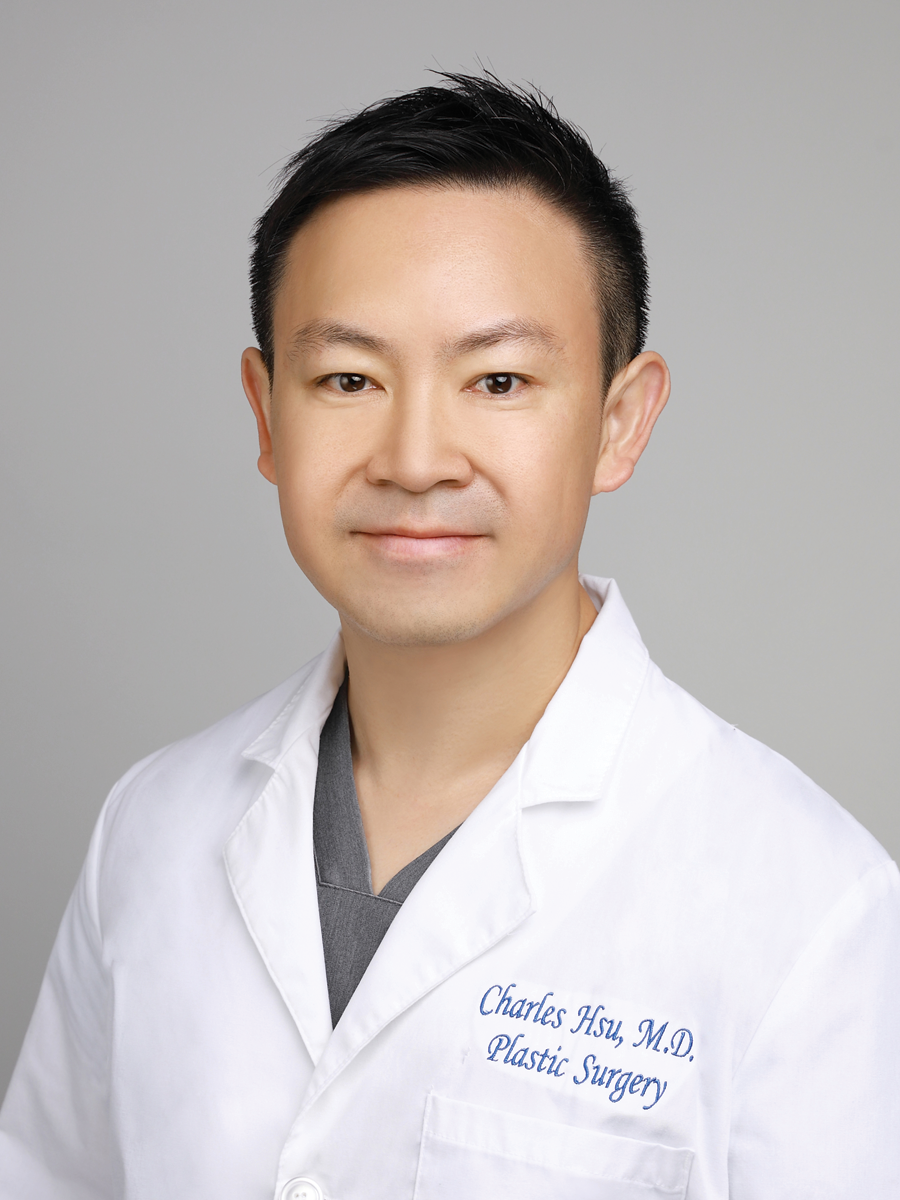
“I’ve seen a variety of scars, from either trauma, prior surgery, piercings, and many other causes, and they can exist anywhere in the body. Although scar revision is a conceptually simple procedure, there needs to be some careful thought to determine why the scar did not heal well the first time, in order to individualize the revision procedure to maximize the outcome.
Overall, I utilize techniques to try to camouflage the scar (either by moving it into a natural skin crease, if possible, or by breaking it up) as well as techniques to help the scar heal in a thinner fashion.”
– DR. HSU

“Some scars from surgery or trauma do not heal normally due to genetics, infection or sub-optimal stitching. These scars can be thick, wide, red and painful. This is called keloid or hypertrophic scarring. Proper removal of these abnormal scars necessitates complete excision of the scar and careful stitching, along with the proper medications.
The most common areas for keloid are ears, face, chest, abdomen and back. ”
– DR. YAO
FREQUENTLY ASKED QUESTIONS
How long does it take to recover from scar revision?
Because different parts of the body heal differently, recovery times and expectations vary depending on the procedure performed and the location on the body. Surgery to repair a scar on the leg may take as long as two weeks to heal, while a procedure on the face may take only about a week. Our doctors will talk to each patient about what to expect after the surgery, as well as how to care for the wound. Carefully following these instructions will help speed recovery and give you the best chance for excellent long-term results.
How to avoid complications?
While scar revision is normally safe, there is always the possibility of complications, as with any surgery. These may include infection, bleeding, and a reaction to the anesthesia or the recurrence of an unsightly scar. Patients can help prevent complications by carefully following all pre- and post-operative instructions. Using a recommended scar gel post-surgery will also help with the healing and appearance of the scar.
What are the different scar revision techniques?
There are several types of scar revision procedures including the following:
– Scar excision: If there is sufficient adjacent skin, the scar is excised or removed, and the skin is closed.
– Z- or W-plasty: The original scar is repositioned along the natural lines and creases in the skin.
– Skin grafting: The scar is surgically removed, and skin from another part of the body is used to cover that area. This method is effective for large scars and burns.
– Skin flap: Similar to a skin graft, skin and the tissue below the skin are moved from another part of the body to cover the site.
SCHEDULE A
CONSULTATION
We are looking forward to meeting you in person, hearing your aspirations, and tailoring a surgical plan especially for you. We hope our in-person consultation will answer all of your questions, provide you a sense of confidence and also further your excitement of the path you are on.